
Supreme Court Argument on Bailey Glasser ERISA Case Being Held October 6, 2026
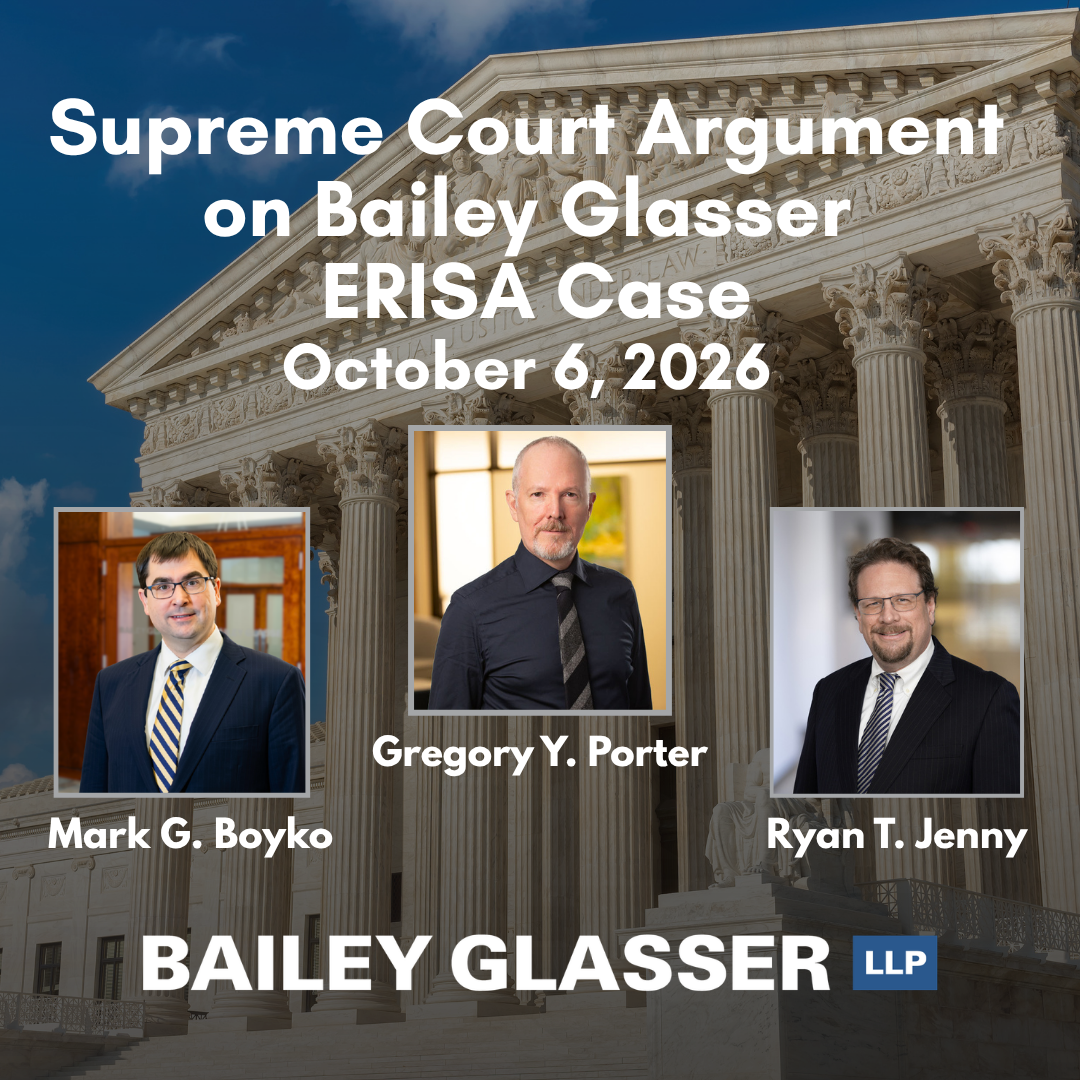
On October 6, the Supreme Court of the United States will be hearing our case Anderson v. Intel Corporation Investment Policy Committee et al., an important case involving how claims that fiduciary standards were breached in the selection of retirement plan investments must be pleaded.
This is the second time this case has reached the Supreme Court. In 2020, a unanimous court held that defendants must prove the plaintiff had actual, not constructive, knowledge of his claims for the three-year statute of limitations to apply. Intel Corp. Inv. Pol. Comm. v. Sulyma, 589 U.S. 178 (2020). The case is especially timely given the recent regulatory and legislative push to allow private equity, crypto and other exotic investments into 401(k) and traditional pension plans.
In January 2026, the Supreme Court of the United States granted the petition for certiorari filed by Bailey & Glasser, LLP and co-counsel on behalf of clients Winston Anderson and Christopher Sulyma in their ongoing case against the Intel Corporation and the plan fiduciaries responsible for investing Intel’s retirement plans. The plaintiffs allege that the defendants mismanaged retirement plan assets by stuffing target date funds and a “balanced fund” in the Intel plans with expensive, opaque, and esoteric private equity and hedge fund investments. These outlier investments caused Intel employees to lose hundreds of millions of dollars in retirement savings.
Gregory Porter, BG’s ERISA Practice Group Leader and leading co-counsel in this case, said, “This case presents a critical opportunity to clarify how courts evaluate fiduciary decision-making in complex retirement-plan investments, particularly as plans increasingly incorporate alternative and nontraditional assets.”
In addition to Greg Porter, the petition was filed by Bailey Glasser’s nationally recognized ERISA litigation team, which includes partners Mark Boyko and Ryan Jenny, as well as co-counsel from Gupta Wessler LLP and The Barton Firm LLP.